
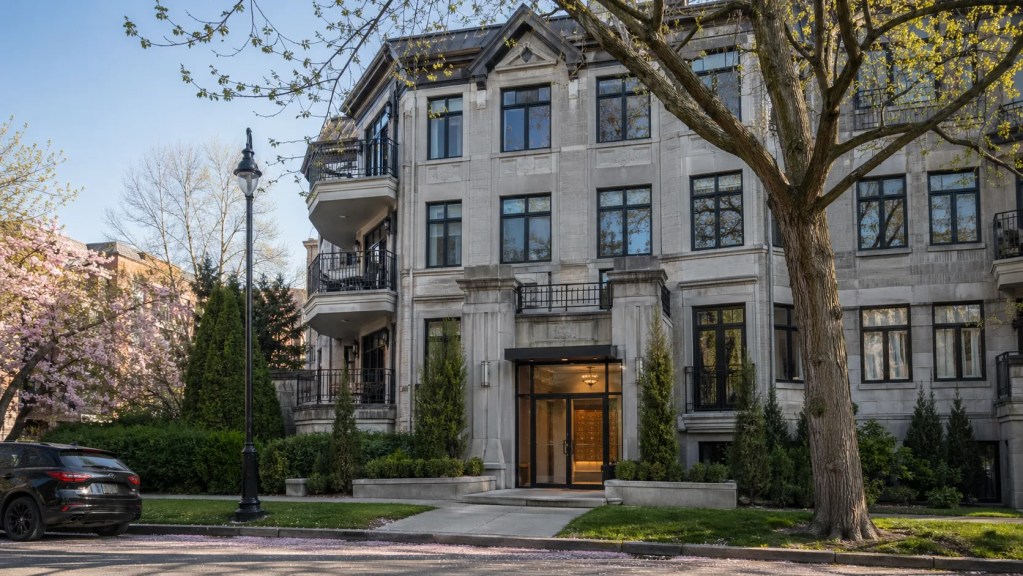
Visit Annual preventative maintenance package for condominiums in Outremont is a recurring service agreement that allows a co-ownership syndicate to schedule its pest control inspections and treatments over twelve months, without having to re-tender for each incident. Outremont has a dense real estate park: centenarian triplexes on Lajoie Street, converted condos on Van Horne Avenue, and adjoining buildings near Outremont Park. These buildings share foundations, crawl spaces, and plumbing stacks that facilitate the movement of pests from one unit to another. Acting before a problem arises is less expensive, and the result is predictable.
For a union, the real question isn't «if» an infestation will occur, but «when.». Carpenter ants (Black carpenter antmouseMus musculusGerman cockroachesGerman cockroach) Each species has its own schedule. An annual contract, aligned with this schedule, transforms a reactive and unpredictable expense into a stable budget line that can be defended at the annual general meeting (AGM). Co-owners find it easier to vote for an expense that is known in advance.
- Budget predictable to the penny: A single line item in the contingency fund, voted on in the Annual General Meeting, eliminates off-budget emergency calls during the year.
- Species-specific calendar: The intervention plan targets critical periods: ant swarming (May-June), mouse peaks (October-November), and cockroach pressure (year-round, intensified in winter).
- Shared responsibility clarified: The contract defines what falls under common areas (syndicate) versus private units (co-owner), reducing disputes at the Régie du logement.
- Annual Report Documentation: Each visit generates a written report—proof of due diligence for the board of directors and for insurers.
- Regulatory traceability: The applied products (hydramethylnon gel, low-dose fipronil, slow-transfer baits) are logged in accordance with MELCCFP requirements for pesticides in urban areas.
Why should a union in Outremont register the Preventive pest control to its annual budget?
Including preventive pest control in the annual budget of the homeowners' association transforms an unpredictable risk into a controlled expense. A recurring contract covers inspections, targeted treatments, and written reports over twelve months. The association avoids the financial pressure of an emergency in the middle of winter, maintains the value of the units, and fulfills its legal obligations as a co-owner of a common area.

Outremont's condominiums present several aggravating factors. The age of the built environment—many structures built before 1960—means fieldstone foundations, interstitial spaces, and unsealed conduits. The neighborhood borders Mount Royal: wildlife (chipmunks, squirrels (rats, Norway rats) exert constant pressure on the perimeters. On Avenue Bernard and Rue Laurier West, neighboring food businesses create supply corridors for cockroaches and rodents migrating to adjacent residential buildings.
In May 2026, several unions in the Parc Avenue sector reported a notable increase in carpenter ant activity following heavy rains from May 8th to 12th — a classic sign of early swarming triggered by the rapid thawing of damp floor joists. A preventive plan in place would have allowed for intervention before swarming, eliminating the mother colony rather than the winged reproductives already dispersed.
The legal framework strengthens the budgetary argument. Condominium Act obliges the union to maintain common areas in good condition. A dated extermination report constitutes tangible proof of diligence. In case of a co-owner's claim for damages caused by pests (secondary mold linked to ants in the joists, contamination of food by mice), the absence of a preventive contract can be interpreted as negligence of the board of directors.
Which pests specifically target buildings? Condo in Outremont And according to which calendar?
Condominiums in Outremont face four priority pests whose life cycles span the entire year: carpenter ants (swarming May-June), German cockroaches (constant pressure, peaks January-March), house mice (infiltration September-November), and Norway rats (Brown rat) become active as soon as the sewers overflow in the spring. Each requires a distinct intervention window.
Carpenter ants. They settle in the damp joists of old triplexes converted into condos. The most effective treatment is the application of slow-transfer baits — a gel based on hydramethylnon or a low dose of fipronil — around the entry points identified during the March inspection. Worker ants carry the bait back to the main colony, eliminating the queen without intensive spraying. Applying insecticidal dusts in wall voids (diatomaceous earth or approved permethrin) complements the treatment of inaccessible areas.
German cockroaches. In the high-rise buildings of Outremont, they travel through electrical conduits, plumbing risers, and the spaces under sinks. Insecticide gel (fipronil 0.05%) applied in small dots within cracks is the treatment of choice: undetectable by residents, odorless, and it forces the insects to consume the bait rather than avoid it. A follow-up at 30 days measures the reduction in the population.
Rodents. Mice and rats can enter through openings less than 6 mm for mice and 20 mm for rats. Perimeter inspections identify failing foundation seals, uncaulked pipe penetrations, and garage door thresholds. The preventative package includes a caulking visit, recommended every fall, which is a crucial step in buildings with unfinished basements that open directly onto alleys.
Caption: picture priority intervention window; ; active = surveillance maintained.
How to structure the Annual extermination contract so that it is adopted without resistance at the AGM?
Structuring an annual extermination contract for a co-owner association requires presenting the service as an asset maintenance expense, akin to snow removal or elevator maintenance. The board must submit the contract with a one-page summary: scope of visits, covered pests, frequency, and reporting mechanism. Co-owners vote on a concrete reality, not an abstraction.
Here are the practical steps for a smooth adoption in AGA:
- Enter the position in the budget project presented 15 days before the meeting, in accordance with the declaration of co-ownership.
- Attach the report from the last inspection (or, if it's the first year, a note from the building inspector mentioning the observed parasitic pressure).
- Clarify the distribution of charges. Common areas (syndicate) versus private units (owner responsible). This clarity reduces objections.
- Quarterly reporting clause Each visit generates a PDF that is sent to the board secretary and archived in the minutes book.
- Mention MELCCFP compliance The contractor must hold a pesticide sales and application license (Category 4 - Extermination) issued by the Ministry of the Environment.
The board of directors benefits from presenting a direct comparison: the cost of an annual preventive contract versus the average cost of a single emergency intervention (off-hours call-out, emergency material purchase, structural repairs if carpenter ants have compromised a joist). According INSPQ (2023), rodents in urban environments can transmit leptospirosis and hantavirus — a public health argument that goes beyond mere nuisance and justifies systematic rather than reactive treatment.
What elements should the preventive inspection report submitted to the board of directors?
The preventive inspection report submitted to the board of directors must document four key elements: the species or signs observed (ant frass, mouse droppings, cockroach molts), identified risk areas, treatments applied with approved products, and structural recommendations for the next 90 days. An incomplete report has no legal or insurance value.
This week, on a duplex converted into four condos on Wiseman Street in Outremont, a technician found frass (fine sawdust characteristic of Black carpenter antbehind the baseboard of the common ground-floor corridor—a sign of active gallery activity less than a meter from the floor joist. Without a planned preventative inspection, this sign would have been ignored until a co-owner noticed winged ants during the June swarming. Early intervention allowed for the application of a slow-transfer bait directly to the entry point.
A good condo report includes:
- Date, technician's name, MELCCFP permit number
- Civic address and unit number of inspected units (common areas only, or units with consent)
- Species detected or suspected, with pressure level (low / medium / high)
- Products used: brand name, active ingredient, concentration, treated area
- Structural recommendations: caulking joints, screening drains, trimming shrubs (the thuya hedges against the facade create corridors for mice)
- Next scheduled visit and objective of this visit
This level of documentation protects the board of directors in the event of a dispute. If a co-owner takes legal action because mice damaged their property in their storage locker (a common area), the association can demonstrate that it had an active prevention program in place, thereby disproving gross negligence.
DIY or professional service: which approach truly protects Value of condominium units in the long term?
To protect the long-term value of condominium units, recurring professional service systematically outperforms DIY. While DIY can put out a visible fire, it won't detect a carpenter ant colony in the joist or a cockroach population in the plumbing void behind the common kitchen. Condominiums that alternate between hardware store traps and occasional emergency calls spend more over three years than those with a preventive contract.
| Criterion | DIY management (reactive) | Annual preventive contract (professional) |
|---|---|---|
| Early detection | ❌ Relies on resident reports | ✅ Structured inspection at each visit |
| Legal documentation | ❌ No formal traceability | ✅ Written report filed, permit number |
| MELCCFP Compliance | ⚠️ Risk of using unapproved products | ✅ Approved products, regulated concentrations |
| Carpenter ant effectiveness | Surface traps only | ✅ Slow-transfer bait reaching the queen |
| Defensibility at the AGM | Hard to justify in an audit | ✅ Clear budget posting, annual report included |
| Cross-unit management | ❌ Each owner acts alone, without coordination | ✅ Global building approach, pest contained |
The value of a unit in Outremont is directly linked to the condition of the common building elements. A potential buyer or their building inspector will note the absence of a pest control program in the syndicate's records. Conversely, a clean file with dated preventive reports reassures the notary, the buyer, and their financial institution. In a market where condos on Davaar Avenue or Côte-Sainte-Catherine Road are selling above municipal assessment, no syndicate can afford to let an undocumented infestation jeopardize a transaction.
The professional approach also includes managing inter-unit complaints. When the owner on the 3rd floor claims that the mice «are coming from the 1st floor,» only an independent inspection report can objectively settle the matter—and prevent the dispute from ending up before the Administrative Housing Tribunal.
And in the neighboring neighborhoods?
- Côte-des-Neiges — high residential density, heavy cockroach pressure in multi-story rental buildings near the subway Côte-des-Neiges.
- Mile-End — old triplexes on Saint-Viateur Street, carpenter ant corridors between adjoining buildings and restaurants on Park Avenue.
- Plateau-Mont-Royal — Central alleyways and community gardens multiplying brown rat burrows in summer, increased pressure on bordering condominiums.
- Town of Mount Royal Single-family homes converted into condos, mouse infestations through unfinished basements during the cold snaps of January-February.
- Rosemont–La Petite-Patrie — new condo syndicates facing pavement antsTetramorium caespitum) ascending through the concrete slabs of the underground parking lots.