
“Moisture bugs” are all those small critters you find in the basement, in the bathroom or near the floor drain: silverfish, woodlice, earwigs, millipedes, house centipedes, springtails and booklice. None of them are dangerous, but seeing them again and again almost always signals too much humidity.
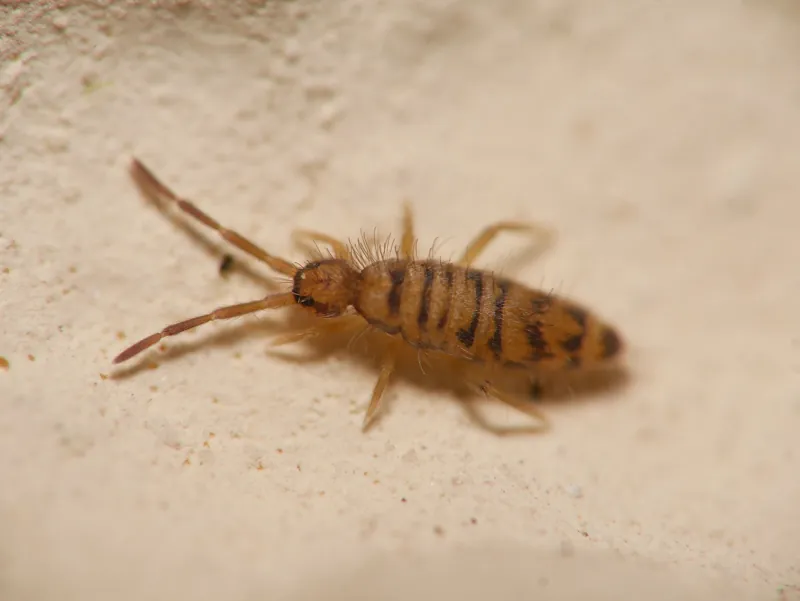
Photo: Alexis · Wikimedia Commons · CC BY 4.0
At a glance
- Seven bugs show up often in Quebec basements and bathrooms; they range from 1 mm to 5 cm.
- They all like dark, damp places: basement, bathroom, laundry room, under the sink.
- None of them transmit disease; silverfish can damage paper, books and fabrics.
- The real treatment is humidity control: aim for about 30 to 50% relative humidity in the house.
- If they keep coming back even though the basement is dry, an inspection can find the source.
How to recognize it
| Bug | Size | What it looks like | Where you see it | Danger |
|---|---|---|---|---|
| Silverfish | A little over 1 cm | Flat wingless body, silvery scales, two long antennae, three tail filaments at the back | Bathroom, basement, attic, at night | Harmless; damages paper, books, fabrics, wallpaper |
| woodlouse | Under 2 cm | Grey segmented shell, like a tiny armadillo | Bottom of basement walls, near doors | Harmless; dies quickly indoors |
| Earwig | 1.5 to 2 cm | Long, shiny reddish-brown body, pincers at the tip of the abdomen | Near doors and foundations, from June or July | Harmless |
| House centipede | 2.5 to 5 cm | 15 pairs of very long legs, long antennae, very fast | Basement, drains, bathroom | Rare, superficial bite |
| Millipede | Varies by species | Round, elongated body, two pairs of legs per segment, slow, curls up | Near doors and foundations | Harmless; doesn’t survive indoors |
| Springtail | About 1.5 mm | Tiny, grey or purplish, jumps when approached | Bathtub, sink, drain, potting soil | Harmless; doesn’t bite |
| Booklouse | 1 to 2 mm | Tiny, pale, often wingless, visible with a magnifying glass | Damp books and cardboard boxes, sweating pipes | Harmless; a sign of mould |
Two mix-ups come up often. Springtails and booklice are almost the same size: the springtail jumps using a small fork under its abdomen, while the booklouse walks. And the house centipede isn’t a true millipede: it has long, thin legs and runs very fast, whereas the millipede is slow and curls up in a spiral. For details, see our guides on woodlice, the earwigs and the millipedes and house centipedes.
Where is it found in a Montreal home?
Homes in Montreal, Laval and on both shores often have a partly below-ground basement, with cold foundation walls where moisture condenses in summer. It’s the ideal spot for these bugs. Bathrooms without a good exhaust fan, under sinks, laundry rooms and basement windows are the other places to watch.
Each one has its reason for being there:
- Silverfish prefer a relative humidity of 75 to 95%. They eat crumbs, starch, glue, wallpaper and paper.
- Woodlice and millipedes live under leaves, stones and mulch. They come in under doors and through cracks, then dry out and die within a few days.
- Earwigs hide during the day in cool, dark, damp places and can come indoors from June or July.
- House centipedes hunt other insects; they come into damp basements and look for shelter when the nights get cooler in the fall.
- Springtails migrate indoors when the soil dries out in summer; they’re mostly seen around drains and the bathtub.
- Booklice feed on microscopic mould on cardboard, books, new plaster or dry food stored in the basement.
Is it dangerous?
No. According to Health Canada, silverfish, earwigs, woodlice, millipedes and house centipedes are harmless to humans. The house centipede has venom glands, but its fangs barely pierce human skin; at worst, the reaction feels like a bee sting and goes away within a few hours. Springtails don’t bite and don’t damage anything in the house.
The real risk is indirect. A large silverfish population can stain and put holes in books, papers, clothing and wallpaper. And large numbers of booklice or springtails point to a moisture problem, sometimes mould, that’s worth fixing for the sake of the house itself.
How to get rid of it
Before using any product, fix the humidity. Without it, most of these bugs disappear on their own.
- Buy a hygrometer and aim for about 30 to 50% relative humidity; in very cold weather, keep it closer to 30% to avoid condensation on the windows.
- Run a dehumidifier in the basement from spring to fall and empty it often.
- Keep the bathroom fan running during your shower and for a good while afterward.
- Fix leaky faucets and pipes; insulate cold water pipes that sweat.
- Outside, direct the downspouts away from the foundation, clear leaves and debris along the walls and keep a dry strip around the house.
- Seal cracks in the foundation and the bottom of doors before fall.
- Replace cardboard boxes in the basement with closed plastic bins and vacuum often.
- For silverfish, a small glass jar wrapped in tape, with a bit of food at the bottom, makes a simple trap: they climb in but can’t get back out.
If the bugs keep coming back even though the basement is dry, a professional does an inspection before any treatment. They look for the source of moisture, the entry points and the places where the bugs hide, then treat cracks, baseboards and the foundation perimeter as needed with products (biopesticides and pesticides) registered by Health Canada, applied according to the label. For woodlice and millipedes, Health Canada even advises against using pesticides indoors: they die on their own in dry air.
When to call an exterminator
Call if you see silverfish every week, if books or papers are damaged, if house centipedes or earwigs come in in large numbers despite sealing, or if you can’t find the source of the moisture. For silverfish, see our page silverfish exterminator in Montreal : the treatment is covered by a 6-month written guarantee. The other moisture bugs are covered by a written guarantee. Our certified technicians hold permits from the Quebec Ministry of the Environment and the City of Montreal. See also our guide Insect identification.
Frequently Asked Questions
What is a moisture bug?
It’s the common name for the small critters attracted to damp places: silverfish, woodlice, earwigs, millipedes, house centipedes, springtails and booklice. They’re mostly seen in the basement, the bathroom and near drains.
Are moisture bugs dangerous?
No. They don’t transmit disease. The house centipede can very rarely bite, but its fangs barely pierce the skin and the reaction goes away within a few hours. Silverfish can damage paper, books and fabrics.
What humidity level should I aim for in the basement?
Aim for about 30 to 50% relative humidity, measured with a hygrometer. In very cold weather, keep it closer to 30% to avoid condensation. Silverfish, for their part, prefer 75 to 95%.
Why am I suddenly seeing so many?
Each bug has its season: earwigs come in as early as June or July, springtails migrate when the soil dries out in summer, and house centipedes look for shelter when the nights get cooler. A leak or a basement that’s damper than usual can also trigger a wave.
Is a dehumidifier enough?
Often, yes, for woodlice, millipedes, springtails and booklice. For well-established silverfish or repeated entries of house centipedes and earwigs, you also need to seal up entry points and, if needed, have their hiding spots treated.
Seeing this insect in your home? Our certified technicians serve Montreal, Laval, the North Shore and the South Shore, 24 hours a day. Request a free quote or call (438) 835-8401.
Other identification guides: Earwigs: Identification and Solutions in Montreal · Millipedes and House Centipedes: Identification and Solutions · Woodlice in the House: Identification and Solutions · Larder Beetles and Carpet Beetles: How to Recognize Them · Weevils and Flour Beetles in the Pantry · Wolf Spiders and House Spiders: Identification and Danger · Deer Mouse, House Mouse or Rat: How to Tell Them Apart · Biting Midges: Recognizing These Tiny Biting Insects · all the guides