

Bed bugs on the metro or the bus — the very idea makes people shudder, especially anyone who rides the Green Line or the 15 Sainte-Catherine every day. Calling a bed bug exterminator in Ville-Marie becomes a concrete consideration once you understand how these insects travel from one home to another via public transit. Ville-Marie is packed with offices, universities, hotels and triplexes: particularly favourable ground for spread.
The risk is not zero. It is real, but limited. Bed bugs don’t fly and don’t jump; they crawl. A bag left on the floor for an hour, a coat tossed on a seat — that’s enough for a pregnant female to hitch a ride unnoticed. Understanding how they are carried unintentionally already cuts off half of the ways they can get into your home.
- Main way they spread: bed bugs spread through passive contact with luggage, clothing and bags — not by flying or jumping.
- Risk in transit: a seat or a metro car floor can serve as a temporary relay; the risk is real but lower than in hotels, non-profit facilities or shared housing.
- Key habit to adopt: never put your bag on the bed when you get home; leave it in the hallway or in a bin by the entrance until you inspect it.
- Laundry protocol: wash and dry clothes on high heat after a high-risk trip — the dry heat of the dryer is enough to kill every life stage of the insect.
- Signs of infestation: reddish-brown stains on bedding, small translucent shed skins in the mattress seams, a characteristic sweetish odour — call an exterminator at the first sign.
How do bed bugs travel on the metro and buses in Ville-Marie?
Bed bugs travel exclusively by “hitchhiking” on objects carried by people. They do not live permanently in metro cars or buses, but they can pass through briefly, clinging to a bag, a coat or a book, before entering a new home.
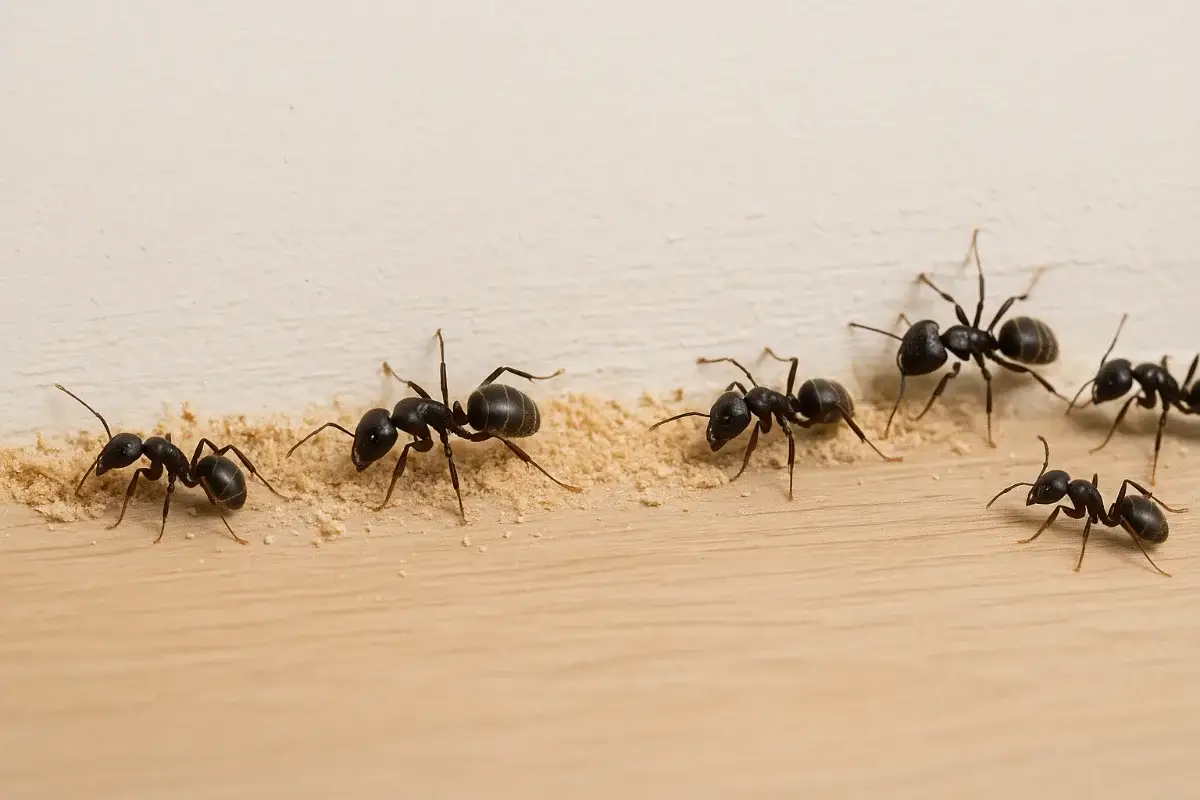
The bed bug is a nocturnal insect that avoids light. During the day, it looks for a dark, confined surface: the inside seam of a backpack, the lining of a winter coat, the bottom of a locker. Workers heading out from Berri-UQAM or McGill station who put their bag on the floor of a crowded rush-hour bus create an opportunity for contact with other people’s belongings.
The way they spread follows a simple logic: a fertilized female can lay two to five eggs a day for several weeks. A single bug carried home is enough to start an infestation if the conditions are right — a human host present at night and stable temperatures. In a studio apartment in the Quartier Latin, those conditions are always met.
Nymphs, smaller than a pinhead, are especially hard to detect with the naked eye. They hide in the seams of fabric bags, the flaps of laptop bags and even in coiled headphone cords. Inspecting your things after every trip is therefore not paranoia — it is a precautionary filter that works.
What are the concrete signs that bed bugs have been brought into a home downtown?
The first signs of an active bed bug infestation are reddish-brown stains (droppings or crushed blood) on sheets and bedding, translucent shed skins in the mattress seams, and bites lined up in groups of three on skin exposed during sleep — often mistaken for mosquito bites or allergies.
In a condo in the Quartier des spectacles or an apartment on Rue Saint-Denis, bed bugs first colonize the mattress and box spring. They then move to the headboard, the baseboards behind the furniture, and then the couch if the occupant sometimes sleeps there. The progression is slow — but steady.
Odour is an underestimated clue. A heavy infestation gives off a sweetish, slightly musky smell, similar to overripe raspberries. It is often unnoticeable at first and only becomes obvious once the colony exceeds a few dozen bugs. At that point, professional intervention can no longer be put off.
Other clues include rust-coloured spots on the wall behind the headboard (frass, the technical term for dried droppings), 1 mm white eggs stuck in crevices, and whitish nymphs that look like slightly translucent sesame seeds. A drain opening, a cracked ceiling or a loose baseboard in an older building on Rue Sherbrooke Est all provide extra hiding places.
| Transit scenario | Niveau de risque | Recommended preventive step |
|---|---|---|
| Bag placed on the metro floor (rush hour) | Moderate | Keep the bag on your lap or closed and worn across your body |
| Coat hung on a bus hook | Low to moderate | Avoid contact with other hanging clothes |
| Luggage set down in a hotel room or Airbnb room | High | Inspect the bedding on arrival and put luggage on the luggage rack |
| Clothes bought at a thrift store on the Plateau or on Rue Ontario | Moderate | High-heat dryer cycle as soon as you get home, before putting them away |
| Moving with second-hand upholstered furniture | Very high | Full visual inspection before entering the home |
Downtown workers and students: how can you avoid carrying bed bugs home day to day?
Workers and students who spend every day in downtown Ville-Marie can reduce their risk of bringing bed bugs home by adopting a few simple, systematic habits: a zippered bag, clothes stored separately on arrival, and a quick check of the bedding before going to bed.
The closed-bag rule is fundamental. A half-open backpack at the back of a crowded bus is an invitation. Bed bugs look for darkness and warmth; an unzipped inside pocket offers exactly that. Choosing bags with zippers on every outside pocket is the simplest habit to adopt.
In October, as the cold season approaches, public transit use increases. People wear more layers and long coats with deep pockets — and bed bugs find more spaces to occupy temporarily. It’s a time of year when extra vigilance is worthwhile.
The routine to follow when you get home:
- Leave your bag in the hallway or entrance — never on the bed or couch.
- Take off your outer clothing in the entrance or bathroom, away from the bedroom.
- Put your clothes straight into the laundry hamper (or in a sealed bag until they are washed).
- Empty your bag over a light-coloured surface and quickly inspect the seams and pockets.
- Put high-risk clothing through a hot dryer cycle before putting it away.
This routine takes no more than five minutes. It is especially relevant for UQAM or Concordia students who use residences or shared spaces on Rue Mackay or in the surrounding neighbourhoods.
What are a landlord’s legal obligations when facing a bed bug infestation in Quebec?
In Quebec, landlords have a legal obligation to deliver and maintain a dwelling in good habitable condition, which includes exterminating pests. A bed bug infestation is a breach of this obligation, and the tenant can apply to the Tribunal administratif du logement (TAL) to obtain redress or force action.
The Tribunal administratif du logement (TAL) regularly handles cases involving insect infestations. Tenants generally need to notify the landlord in writing, give them a reasonable amount of time to act, and keep a record of all communications in case of a later dispute. The written notice is the starting point for any legal action.
In a multi-unit building — a triplex on Rue Beaudry or a rental building on Saint-Hubert — bed bugs spread quickly between units. They travel through electrical outlets, gaps in the ceiling and shared ducts. It is therefore in the landlord’s interest to treat the entire building, not just the unit reported as infested. A partial treatment = an incomplete treatment.
For tenants, telling the landlord quickly is also a moral and practical obligation: delaying the report lets the infestation grow and spread to the neighbours. Under a Quebec lease, both parties are expected to act in good faith. Exterminators working under the Pesticides Act (administered by the MELCCFP) must hold the required certifications — something the landlord should require before any treatment.
Should you call a professional exterminator, or can you get rid of bed bugs yourself in Ville-Marie?
No, DIY treatment is not effective against an established bed bug infestation. These insects quickly develop resistance to store-bought insecticides, retreat into inaccessible cavities as soon as they sense a threat, and their eggs are immune to most contact insecticides.
The main difference between a professional intervention and a home treatment lies in how thorough the treatment is. A qualified exterminator treats the mattress seams, the underside of the box spring, the gaps behind baseboards, electrical outlet cavities and the spaces under floating floors. A homeowner with an aerosol bug bomb only covers the visible surfaces — where the bed bugs no longer are once they have detected the product.
The biopesticide Aprehend (based on the insect-killing fungus Beauveria bassiana) is a tool of choice in today’s professional treatments. It forms a fungal film on the surfaces bed bugs travel across; the bugs carry it on their cuticle and pass it on to others through contact. This mode of action gets around resistance to conventional chemical insecticides. Its use is reserved for pesticide applicators certified by the MELCCFP.
For Ville-Marie residents — especially in the dense buildings around the CHUM, Rue Sainte-Catherine or Old Montreal — a fast response is critical. Every extra week widens the infested area and makes decontamination more complex. Calling an exterminator promptly is an investment in prevention that costs far less than an infestation left alone for months.
And in the neighboring neighborhoods?
- Plateau-Mont-Royal — a high density of student housing and older triplexes; high risk of spread between units.
- Rosemont–La Petite-Patrie — many rental buildings from the 1950s to 1970s with shared ducts that make it easier for bed bugs to spread.
- Mercier–Hochelaga-Maisonneuve — an aging housing stock and high tenant turnover, two factors that increase reintroductions.
- Verdun — growing popularity of sublets and shared housing; a risk profile similar to central neighbourhoods.
- Côte-des-Neiges–Notre-Dame-de-Grâce — a high concentration of university students and dense residences near the campuses, a frequent route of introduction.