
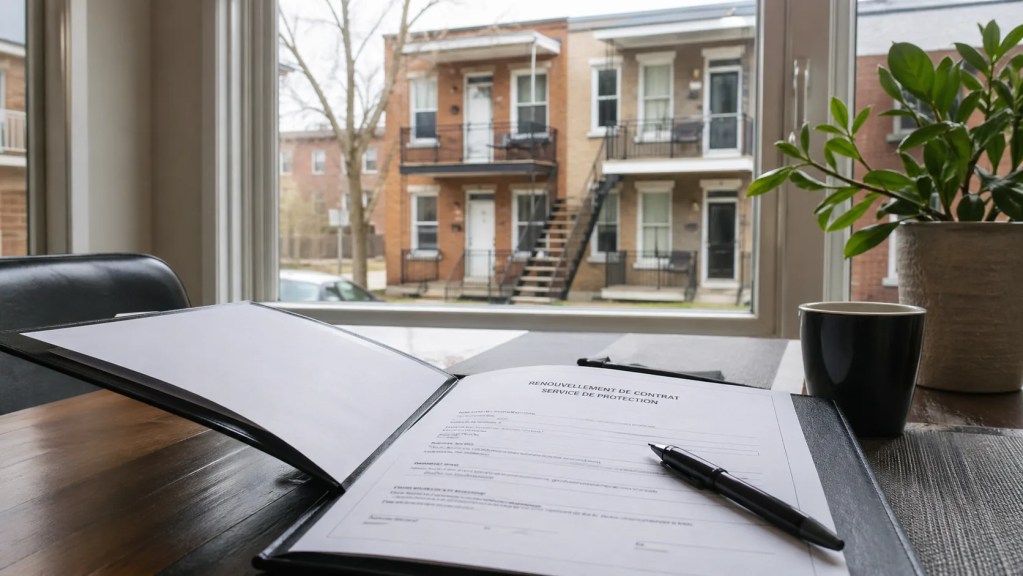
Renewing your pest control contract in Saint-Michel is one of the most concrete decisions a property owner or manager can make to keep their units pest-free year-round. Saint-Michel is a dense neighborhood—triplexes, duplexes, and apartment blocks from the 1960s-70s along Jarry and Pie-IX streets—where German cockroach infestationsGerman cockroach), of carpenter ants (Black carpenter ant) and common mice (Mus musculus) are easily transmitted from one dwelling to another. A one-time treatment rarely resolves the problem at its root. That is why the annual renewal exists.
In May 2026, several property managers in the Saint-Michel-Nord sector reported an increase in cockroaches in their kitchens following a mild winter and heavy rains in April. The life cycle of urban pests follows precise seasonal patterns. Waiting for a visible infestation before acting always costs more – in stress, management fees, and legal obligations to tenants. It is better to understand the timing, triggers, and renewal logic to make an informed decision.
- Annual renewal is recommended as soon as the residual period of the applied biopesticide ends (generally 10 to 12 months depending on the product and treated area).
- Four key periods exist: post-winter (March–April), spring peak (May–June), autumn peak (September–October), and pre-winter (November)—each corresponds to a distinct migratory wave.
- In Saint-Michel, German cockroaches and carpenter ants are the most frequently targeted species in residential spray contracts.
- The renewal also covers prevention: inspection, sealing of entry pointsexclusion), application of insecticide gel (hydramethylnon or low-dose fipronil) in high-risk areas.
- The owner has a legal obligation towards its tenants: maintaining habitable housing in good condition includes pest control, according to the Régie du logement du Québec.
Why the Annual spray renewal Is it essential in Saint-Michel?
The annual reapplication of spray is essential because the effectiveness of residual insecticides gradually decreases over time due to heat, humidity, and regular surface cleaning. In Saint-Michel, a neighborhood largely composed of older multi-family dwellings with shared walls, an untreated infestation in a neighbor's unit can recolonize a treated unit within weeks.
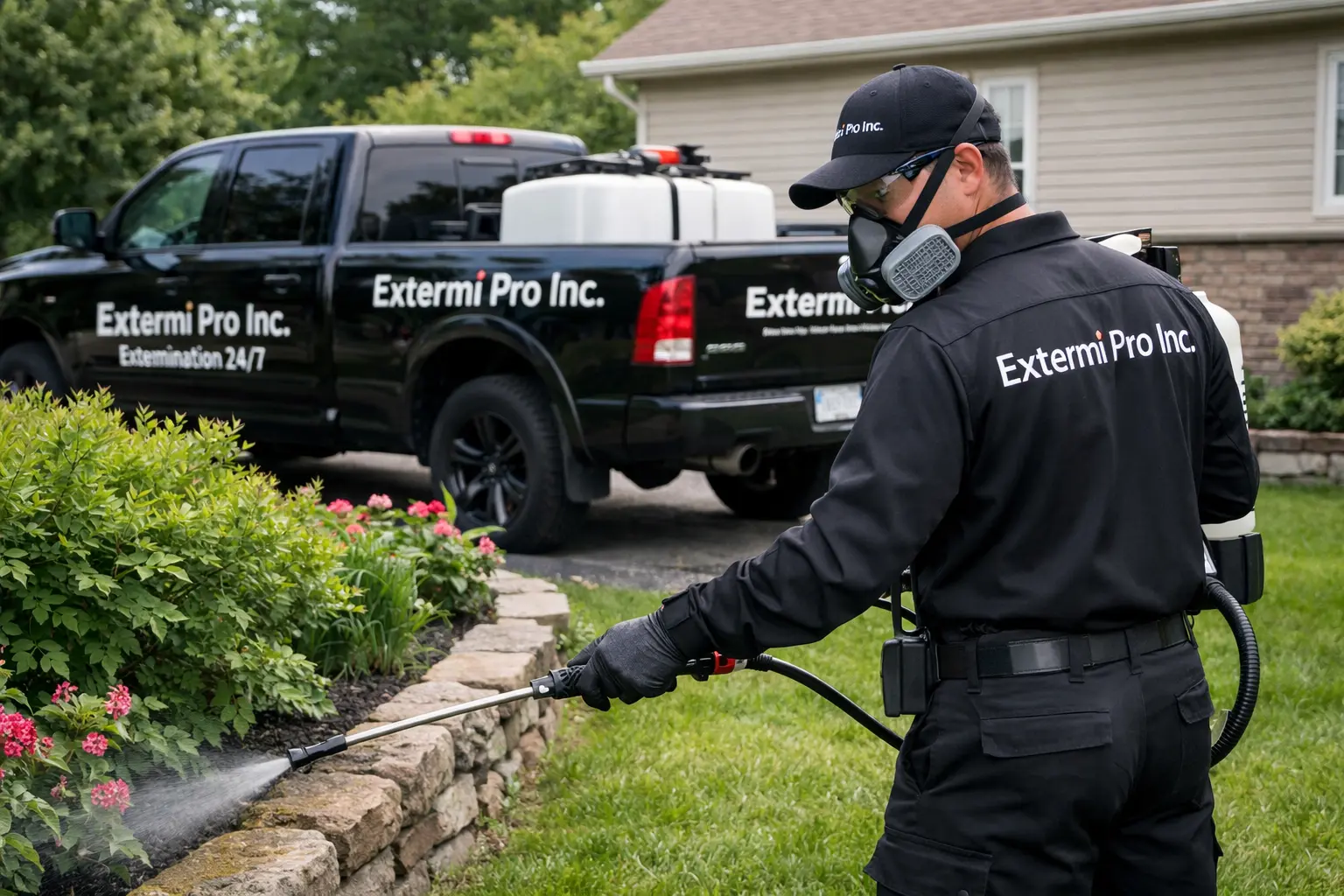
German cockroaches, the dominant species in this area, reproduce at a staggering rate: one female can produce up to 400 offspring in six months. Their resistance to traditional insecticides increases generation after generation when applications are irregular or incomplete. An annual contract maintains continuous chemical pressure on populations, which limits the emergence of resistance.
Carpenter ants, on the other hand, follow a different cycle. They swarm in the spring — generally between late May and mid-June in Montreal — and establish new colonies in damp woodwork or unfinished basements. The spring renewal allows for the application of a low-dose fipronil-based insecticide gel in high-traffic areas before scout workers can map your building. Acting before swarming is nipping the problem in the bud.
On Jarry Street East, buildings constructed before 1970 have unsealed plumbing and electrical conduits between floors – highways for pests. This week, on a duplex on Jarry Street East, a technician identified 14 active entry points behind the ground-floor kitchen cabinets, all connected to a cockroach colony established in the basement for at least two winters. The annual renewal includes this systematic inspection, something a one-time treatment does not.
When should you plan the renewal calendar to maximize protection?
The ideal renewal calendar targets two priority windows: March-April to block the spring migration, and September-October to prevent winter intrusion. These two periods correspond to times when pests are actively seeking to change their environment—heat in summer, indoor warmth in winter—and are therefore most mobile and vulnerable to contact treatments.
January and February are months of low visible activity—but the cockroaches are very much present, huddled near heat sources (behind refrigerators, under dishwashers, in hot water cabinets). Planning for renewal in March allows for intervention before the indoor-outdoor temperature increase accelerates their reproductive cycle. It's short. It's strategic.
Autumn is the second major window. Mice (Mus musculusand cockroaches try to settle in before the frost. In the Pie-XII Park sector and around the Central Market, buildings on the waterfront see a rise in calls every year in September-October. According to INSPQ (2023), urban rodents can transmit leptospirosis and hantavirus, two zoonoses to monitor in densely populated residential areas like Saint-Michel.
Renewing in October rather than December means treating populations still actively moving, before they settle into their homes. A month's delay can turn an effective treatment into a long and costly battle.
Annual contract or one-time interventions: which to choose for your building in Saint-Michel ?
An annual contract provides continuous preventative coverage, a systematic inspection with each visit, and documented follow-up—three elements that a one-time intervention does not guarantee. For owners of multi-family buildings in Saint-Michel, an annual contract is almost always the most effective solution, as it addresses cross-unit contamination rather than treating each unit in isolation.
| Criterion | Annual contract | One-off intervention |
|---|---|---|
| Application frequency | 2 to 4 planned passages/year | 1 on-demand pass |
| Inspection included | Yes — each visit | Non-systematic |
| Multi-family dwelling insurance | Complete building (common areas + units) | Targeted housing only |
| Documented monitoring (lease/management) | Yes — written report at each visit | As requested |
| Products used | Hydramethylnon + fipronil gel, scheduled rotation | Gel or spray depending on urgency |
| Resistance prevention | Active molecule rotation | Weak — same product repeated |
| Landlord Compliance Obligation | Easily demonstrated | Partial — depends on context |
For a bachelor or a condo where only one tenant reports an isolated problem, a one-time intervention may be enough if the problem is truly contained. But in a typical triplex on Bélanger Street or a cross street in the Saint-Michel–East sector, shared ducts make cross-contamination almost inevitable. An annual contract, in this context, is not a luxury—it's rational risk management.
What are the signs that indicate that the previous treatment is exhausted and what needs to be renewed?
Signs of depletion from a previous treatment include the reappearance of active individuals during the day, the presence of frass (cockroach droppings, dark brown granules 1 mm in size) in kitchen corners, and the discovery of new ant trails despite recent treatment. These signals indicate that the residual insecticide load has fallen below the lethal threshold for young individuals.
Here are the concrete indicators to monitor between two renewals:
- Cockroaches visible during the day — sign of overpopulation or loss of effectiveness of the insecticide gel in the treated areas.
- Presence of frass in the drawers, under the sink, or behind the microwave — proof of sustained nocturnal activity.
- Oothecae (egg cases) cockroach discoveries — each ootheca contains 30 to 40 embryos, a sign of an actively expanding colony.
- New ant trails despite the initial implementation—workers found workarounds or new entry points.
- Mouse droppings back in the pantry or near the stove — rodenticide baits have been consumed or displaced.
- 10 to 12 month timeframe elapsed since the last pass — even without visible signs, the chemical cover is statistically depleted on the majority of surfaces.
In Saint-Michel, the residential density around the Saint-Michel metro station and the Pie-IX–Fleury bus station creates permanent migration corridors. A treated building surrounded by untreated buildings will be re-contaminated within 4 to 8 weeks in the worst-case scenario. This is the reality on the ground in this neighborhood—and this is precisely why regular renewal is so important.
How does it concretely happen? Spray contract renewal Step by step?
Contract renewal for spraying follows a five-step protocol: initial inspection, establishment of the treatment plan, preparation of the premises by the client, application of approved products, and a written follow-up report. Each step is documented to allow the owner to demonstrate due diligence in the event of a rental dispute.
- Preliminary inspection (30-45 min): The technician identifies the species present, active entry points, and high-risk areas (kitchen, bathroom, unfinished basement, electrical conduits).
- Treatment Plan: Product selection — hydramethylnon insecticide gel for cockroaches, low-dose fipronil in carpenter ant galleries, secure rodenticide baits for mice.
- Customer preparation: Empty the cabinets under the sink, clear the baseboards, and pack up any food items in the pantry. A well-prepared tenant can reduce the inspection time by 20 to 30 minutes.
- Application Residual spraying in accessible areas, gel injection into cracks, placement of secure bait if rodents are present. Duration: 45 to 90 minutes depending on the size of the building.
- Written report submitted to the owner: Products used, areas treated, recommended next renewal date, observations on the condition of the premises. This document is your legal proof to the TAL (Tribunal administratif du logement) if a tenant contests.
In May 2026, a marked increase in renewal requests in Saint-Michel–Nord following persistent rain from May 10 to 18—the humidity accelerated the degradation of residual insecticides on porous surfaces like old hardwood floors. Owners who had signed an annual contract were able to schedule an additional visit covered by their agreement, with no additional fees or extended appointment waiting times.
Lease renewal isn't an expense — it's a property management tool. In a neighborhood like Saint-Michel, where tenant turnover is higher than the Montreal average and older buildings present numerous structural vulnerabilities, maintaining an active and documented lease protects both the owner and their tenants.
And in the neighboring neighborhoods?
- Montréal-Nord high density of apartment blocks along Gouin Boulevard, similar challenges of renewal for German cockroaches in low-income housing.
- Villeray – area of century-old duplexes and triplexes where carpenter ants target damp, unfinished basements each spring.
- Rosemont–La Petite-Patrie — very active area for rodents in the fall, particularly around Jean-Talon Market and the green alleyways.
- Anjou — Residential area with carpenter ant issues in wooden structures and mouse intrusions late in the season.
- Saint-Léonard — 1970s–1980s semi-detached houses exhibiting the same migration corridors as Saint-Michel along the Viau and Lacordaire axes.