
Extermination continues in Chomedey (Laval) against the pests
In Chomedey (Laval), infestations rarely return by chance. In duplexes, old buildings, and high-turnover apartments, pests move from one unit to another, exploiting every structural flaw. This is why a tracking in extermination is essential to stabilize a situation and prevent recurrence.
One exterminator An experienced professional never limits themselves to a single intervention. They implement methodical monitoring, adapted to local realities, in order to provide lasting protection for occupants, children, animals, and the building against pests. The essential question remains: why is follow-up essential in this type of dense urban environment?.
Diagnosis in-depth
The monitoring always begins with a comprehensive pest inspection, tailored to the local realities of Chomedey. The buildings there often present old cracks, shared conduits, and hidden technical areas that facilitate pest movement.
This field analysis makes it possible to identify infiltration routes, propagation factors, and risk zones. In some cases, a presence of cockroaches can indicate humidity conditions that favor all household pests, which requires immediate targeted action to eliminate the source and not just the symptoms.
Monitoring then relies on repeated observations, adjustments, and an evolving strategy. A single, isolated intervention does not account for the reality of recurring pests, particularly in multi-unit buildings where infestations spread discreetly.
In this logic, technicians also use concrete comparative benchmarks, particularly when a similar activity is observed in related cases. mouse, to adjust tracking methods and ensure overall control consistency.
Signs indirect
- Repeated presence of discreet traces on surfaces or in corners of the dwelling
- Abnormal accumulation of small matter or residue in infrequently visited areas
- Progressive deterioration of materials with no immediate visible cause
- Persistent odors in certain rooms despite regular cleaning
- Indices in hard-to-reach areas like cabinets or baseboards
- Light noises accompanied by physical traces such as displaced materials or accumulated dust
- Fluctuating activity depending on the time of day or season
These signs of infestation must be interpreted correctly within the framework of a FAQ extermination or professional follow-up. In some cases, a global infestation may coexist with pressure observed among ants, which recalls the importance of treating the entire environment before any aggravation.
Areas hidden specific to the neighborhood
| Zone | Description | Risk | Impact |
|---|---|---|---|
| Antique baseboards | Invisible openings in aging structures | can promote circulation between units | silent propagation |
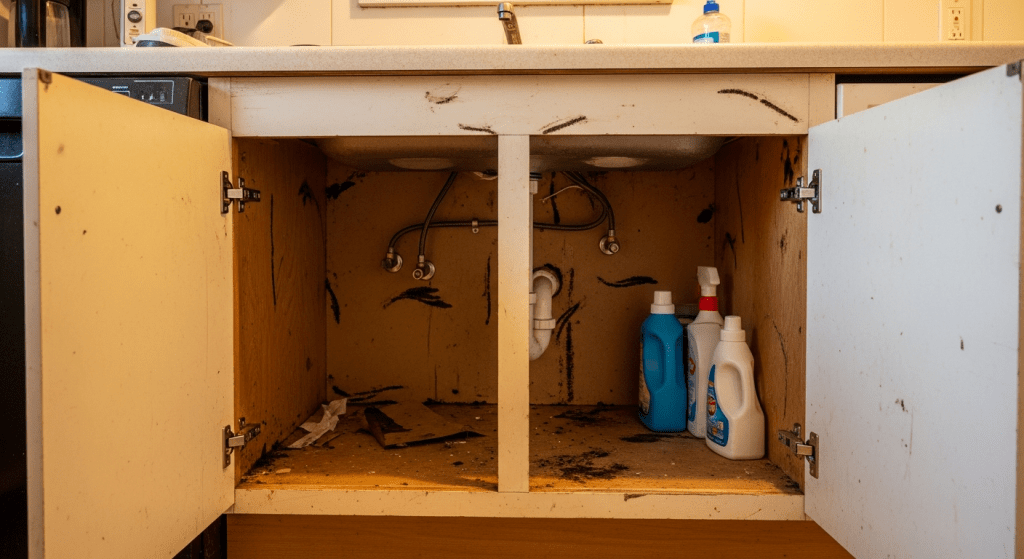
| Under the sink | Constant humidity and access to pipes | Nesting risk | persistent activity |
| Technical video | Inaccessible spaces between walls | can serve as a corridor | difficult to control |
| Suspended ceiling | Connection between dwellings or floors | risk of rapid displacement | reinfestation |
| Cracked balconies | Weather-exposed structure | can promote infiltration | exterior entrance |
Errors frequent of occupants
- Stop measurements after a single visible intervention
- Ignore subtle signs, thinking the problem is resolved.
- Do not coordinate actions with neighbors in the building
- Leave openings like cracks or gaps around pipes
- Postpone a thorough pest inspection despite clear indications
- Use inadequate methods that spread pests.
- Underestimating the importance of monitoring in multi-unit housing pest control
- Do not document observations between professional visits
In certain contexts, mismanagement can bring to mind situations observed with the bed bugs, where the lack of follow-up amplifies the spread. This confirms that a structured plan remains the only effective approach against recurring pests.
Risks washrooms and collective
Without follow-up, the consequences far exceed simple discomfort. Pests can contaminate surfaces, damage structures, and create an atmosphere of insecurity in the building.
At the Chomedey scale, these situations often lead to complaints, a degradation of living conditions, and a spread to other units. Absent or incomplete management exacerbates housing pests and complicates any attempt at stabilization.
Clear guidance and a reliable reference like FAQ allow for a better understanding of the necessary steps. If in doubt, prompt action is still essential by consulting the page contact.
Approach professional compliant Quebec
An effective strategy relies on several planned interventions, continuous adjustments, and an analysis of field results. This approach helps to break infestation cycles and ensure sustainable pest prevention.
The monitoring includes regular checks, correction of favorable factors, and adaptation to the specific conditions of each building. This method aligns with the realities observed in Montreal and Laval for pest extermination.
In some cases, experience gained with infestations such as spiders allows for adjusting visual inspections and optimizing checkpoints, before immediately returning to overall primary pest management adapted to the dwelling.
To ensure effective and secure follow-up, it is essential to use a professional service via the page contact in order to establish a plan adapted to the reality of the building and its occupants.