
Infestation or simple passage in Ahuntsic–Cartierville: pests under the microscope
In Ahuntsic-Cartierville, among older duplexes, semi-finished basements, and kitchens opening onto backyards, it's common to observe ambiguous signs. Is this a real infestation? The answer depends on a precise field diagnosis. An experienced exterminator distinguishes an isolated passage from an established activity by combining concrete observations and occupation history. If you doubt, a quick inspection helps you decide and protects occupants, children, and pets.
In-depth diagnosis
The core of the diagnosis relies on consistency between traces, frequency, and location. In pest inspections, tangible signs of infestation are noted first: accumulations, regular pathways, and material damage. Then, it is verified if the activity repeats over time and if it is concentrated in specific areas of the dwelling. A simple, isolated observation, without traces or repetition, more often suggests a one-time passage.
In apartment buildings in Ahuntsic–Cartierville, technical voids connecting units facilitate dispersion. Targeted intervention begins with identifying entry points and resting areas. To frame your approach, consult our inspection and treatment services and, if necessary, record the events before making an appointment here.
Pests in housing often take advantage of micro-openings, residual moisture, or poorly contained waste. In comparison, the presence of cockroaches can increase when humidity and food sources are constant; then return to your case and check if your signs appear sporadically or in a structured way to confirm a simple passage or an active infestation.
Indirect signs
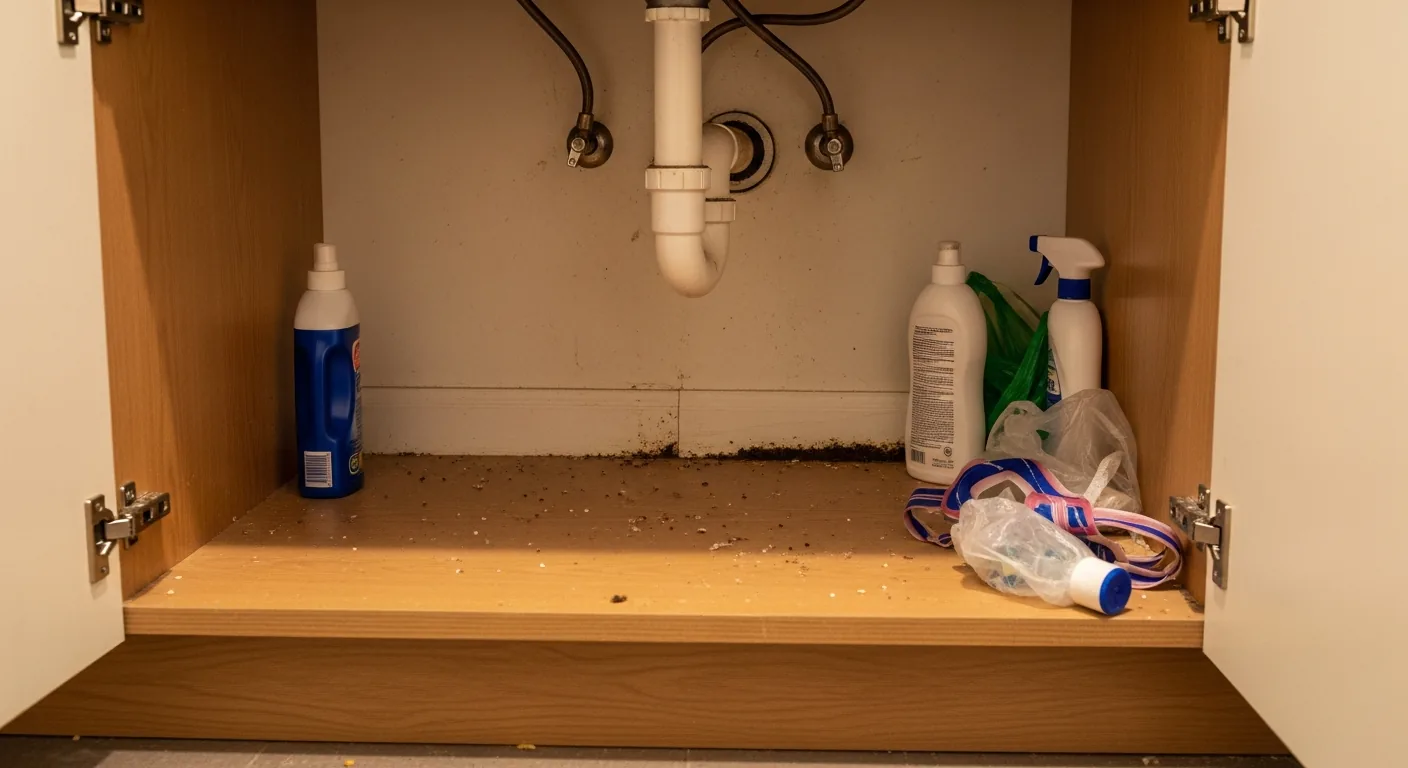
- Repeated physical traces in the same location: micro-debris, residues, displaced material near a baseboard.
- Visible and recent droppings, found in small, regular piles rather than isolated.
- Altered materials: opened packaging, gnawed cardboard corners, compromised foodstuffs.
- Lingering odor in a specific area, associated with other physical clues.
- Tracks on dusty surfaces, identical trajectories observed over several days.
- Night-time activity with noise and visible evidence in the morning, like newly displaced debris.
- Reappearance after targeted cleaning, indicating an active, uneliminated source.
To learn more, refer to the FAQ extermination. By comparison, mice often leave very localized food clues; then return to your situation and check if the signs repeat in the same place to guide the diagnosis.
Hidden areas specific to the neighborhood
| Zone | Context Ahuntsic–Cartierville | Possible clue | Risk |
|---|---|---|---|
| Kitchen sink cabinet | Old piping, worn joints | Persistent humidity, micro-debris | Can promote a discreet activity |
| Living room baseboards | Wooden floors, slight cracks | Linear traces, fine residues | Risk of repeated circulation |
| Wall cavity | Shared walls between residences | Buildup behind outlets, dust displaced | Propagation between units |
| Pantry | Dense storage, variable rotation | Locally altered packaging | Food contamination |
| Semi-finished basement | Seasonal humidity, exposed concrete | Deposits at the foot of walls | Possible long-term establishment |
| Service entries | Back doors, common courtyards | Occasional traces near thresholds | Intermittent passage |
Common occupant mistakes
- Jumping to conclusions too quickly about an infestation after a single sighting without physical evidence.
- Cleaning without documenting, which erases useful diagnostic clues.
- Moving suspicious objects from one room to another, potentially spreading the activity.
- Using unsuitable products that disperse rather than control.
- Ignore technical areas such as baseboards, under sinks, and wall outlets.
- Leave food sources open or untidy waste.
- Wait despite repeated signs over several days.
- Confusing a seasonal passage with an established infestation, without checking for repeated clues.
Confusion can arise when ants appear near a sugary source; return immediately to your case and confirm if your clues persist in the same areas before acting.
Health and collective risks
A confirmed infestation exposes to material contamination, degradation of foodstuffs, and complaints within the building. In multi-unit housing, mobility between units increases pest recurrence if the source is not addressed. Pest prevention involves sealing, targeted hygiene, and management of entry points.
Consult the FAQ for best practices and quickly report any recurrence from the page contact. By comparison, bed bugs spread easily in textiles; then return to your situation and check if your clues concern fixed areas of the dwelling rather than mobile furniture.
Compliant professional approach in Quebec
Montreal pest extermination relies on a protocol: structured visual inspection, confirmation of evidence, mapping of active areas, then an intervention plan adapted to the building. The objective is to protect occupants and cut off access and retention factors.
A professional prioritizes identifying entry points, correcting favorable conditions, and targeted treatment, followed by monitoring to confirm the activity has stopped. Schedule an appointment on the page contact. In a structural context, clues in the wood can reveal a risk related to termites; return immediately to your general diagnosis and check the consistency of the observed traces to avoid any confusion.
And in the neighboring neighborhoods?
Key takeaways on pest diagnosis in Ahuntsic–Cartierville:
- Three combined elements confirm an infestation: signs, repetition and active areas.
- An isolated passage without traces or recurrence does not require the same intervention as an infestation.
- Technical voids in older plexes promote rapid spread between units.
- On-site diagnosis combines concrete observations and housing occupancy history.
- A quick inspection by an exterminator protects occupants, children, and pets.