
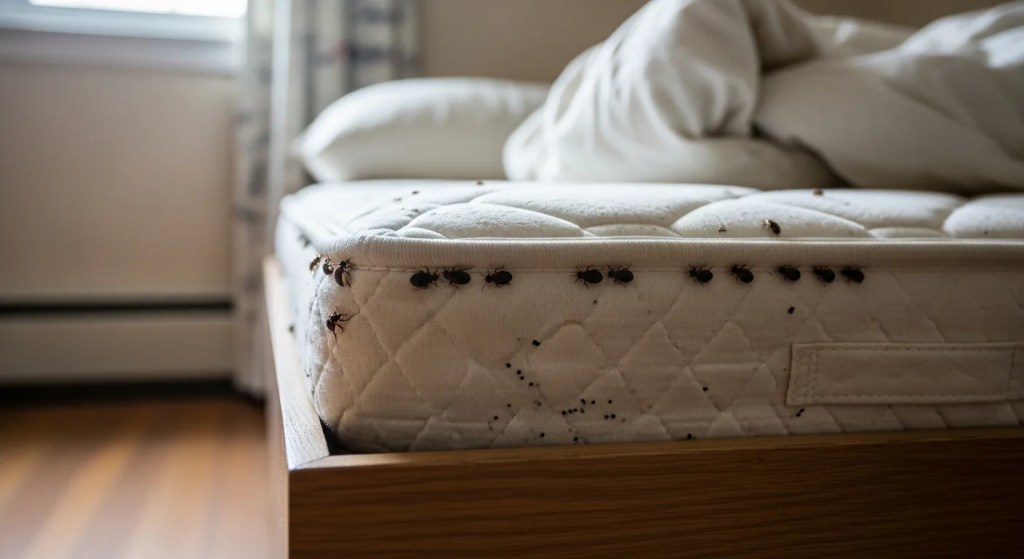
Moving to Hochelaga-Maisonneuve often means sidewalks lined with abandoned furniture, shared trucks and boxes picked up at the corner store. Bed bugs after a move to Hochelaga are a real risk that many new tenants discover too late — sometimes weeks after moving in, once the first bites appear. Acting quickly changes everything.
The Ontario Est area, the triplexes on rue La Fontaine, the units near Joliette metro station: these dense settings allow Bed bug, the bed bug species common in North America, to circulate silently. A mattress found on the sidewalk on avenue Bourbonnière, a dresser bought on a resale platform, a moving truck used by several households on the same day — any one of these can be enough to bring an infestation into a unit that was clean.
- Upholstered furniture and mattresses left on the sidewalk are the most common ways bed bugs get introduced during a move.
- The first signs (small dark frass spots, translucent cast skins, bites in a line) can appear two to four weeks after moving in, as the population grows.
- The tenant must notify the landlord in writing at the slightest sign; if the landlord fails to act, the matter can be brought before the Tribunal administratif du logement (TAL).
- Professional treatment with a targeted biopesticide is carried out in two visits 15 to 20 days apart, to cover the insect’s complete life cycle.
- Inspecting every piece of furniture before bringing it into the unit is the most effective preventive measure — even for items that look clean.
Which items brought in during a move can introduce bed bugs into your home?
During a move, upholstered furniture, mattresses, wooden bed frames and recycled cardboard boxes are the main ways Bed bug gets introduced. These items can harbour eggs, nymphs or adults in their seams, cracks or folds, with nothing visible to the naked eye at a quick glance.
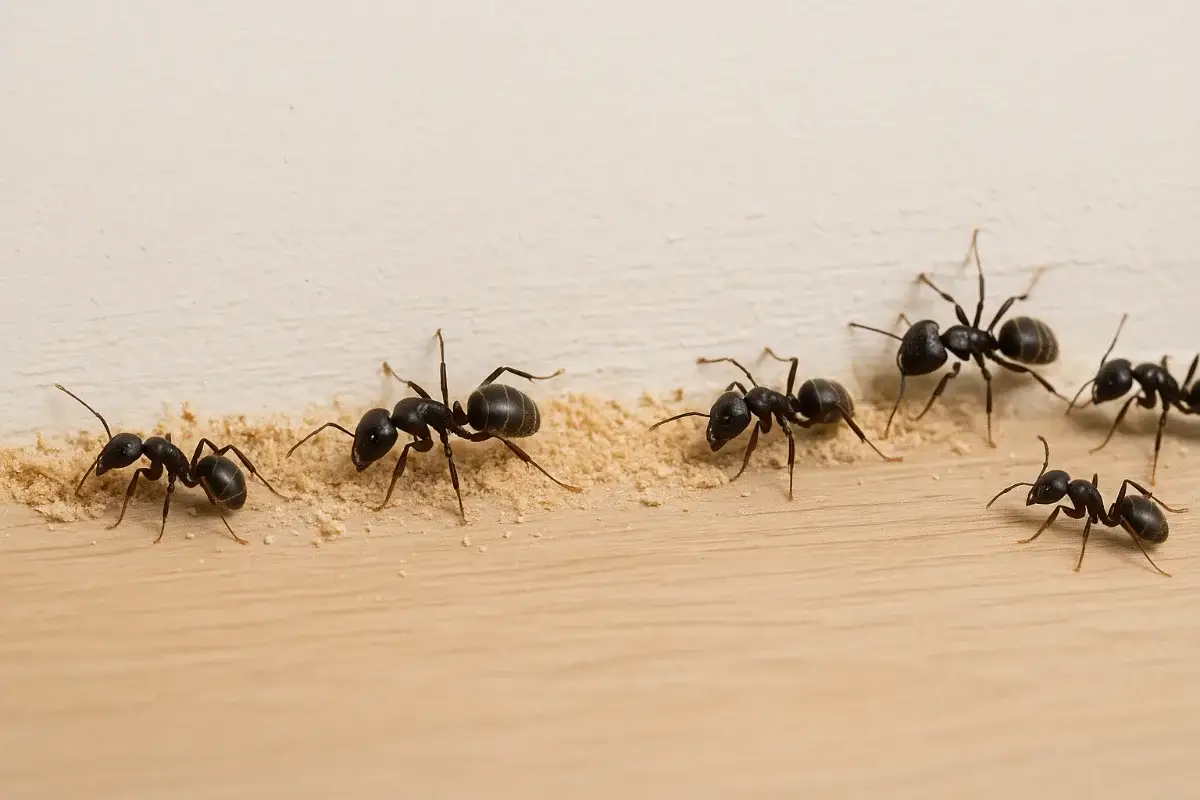
In Hochelaga-Maisonneuve, end-of-lease days — especially around July 1 — turn sidewalks into makeshift markets. A sofa left in front of a triplex on rue Sainte-Catherine Est may have harboured an active infestation. Picking up that sofa without inspecting it can mean bringing home hundreds of eggs. Cardboard boxes collected from merchants at the Marché Maisonneuve or in the laneways carry a lower but not zero risk: adult bed bugs can take temporary refuge in them if the box was stored in an infested building.
The shared moving truck deserves special attention. Several households may use it on the same day. If the previous household was moving contaminated furniture, individual bugs can migrate to your mattresses or closed boxes. Before loading anything, a quick inspection of the truck’s walls and floor with a headlamp reduces this risk.
Rule of thumb: any upholstered furniture picked up for free should be inspected outdoors, never brought straight into the unit. Flip the cushions. Examine the seams with a flashlight. Look for black dots the size of a pinhead — these are frass deposits (droppings), a reliable sign of recent activity.
How do you inspect used furniture for signs of bed bugs before bringing it into your apartment?
Inspecting used furniture for bed bugs means looking for four concrete clues: frass deposits (small dark spots), translucent nymph cast skins, pearly white eggs about one millimetre long, and live, flattened reddish-brown insects. The inspection should be done outside the unit, in daylight or with a headlamp, before any contact with your own belongings.
Here is a structured inspection method that applies to any furniture picked up in Hochelaga or transported in a shared truck:
- Set the furniture on a hard surface (concrete, asphalt), never on the lawn or in a dark laneway.
- Remove all cushions and removable covers. Examine the seams, gussets and zippers.
- Turn the furniture over. Bed bugs prefer to colonize areas where skin meets fabric, but also the underside of frames.
- Use a headlamp. Shine it into cracks in wooden structures, around screws and along joints.
- Run a stiff white card along the grooves — frass sticks to it and becomes visible against the white background.
- When in doubt, pass on the furniture. The risk is never worth the value of a free item.
For a mattress, pay special attention to the edge seams and the head area. These are the favourite microenvironments of Bed bug: warm, close to the host and sheltered from light.
| Entry route | Niveau de risque | Recommended preventive measure |
|---|---|---|
| Mattress found on the sidewalk | 🔴 Very high | Always refuse — never take it home |
| Sofa or armchair picked up for free | 🔴 High | Careful inspection outside before bringing it in |
| Used wooden dresser or bed frame | 🟠 Moderate to high | Inspect joints and cracks with a headlamp |
| Shared moving truck | 🟠 Moderate | Inspect the floor and walls before loading |
| Recycled cardboard boxes | 🟡 Low to moderate | Choose new boxes; inspect the inside if they are reused |
| Clothes in unsealed bags | 🟡 Faible | Wash hot and dry on a hot cycle on arrival |
What are the first signs of a bed bug infestation to watch for in the weeks after a move?
In the first weeks after a move, the signs of a bed bug infestation are often subtle: a few bites when you wake up, small dark spots on the fitted sheet, and sometimes a faint sweetish odour reminiscent of coriander in a confined space. These clues should trigger a full inspection, not a wait-and-see approach.
In October, as outdoor temperatures drop and homes in Hochelaga-Maisonneuve are heated around the clock, bed bugs find ideal conditions: stable warmth, a sedentary host, prolonged darkness. Heating speeds up the development cycle of Bed bug — from egg to nymph to adult in a few weeks in a warm home.
The bites stand out because they are arranged in a line or zigzag on exposed areas (arms, shoulders, neck). Unlike mosquito bites, they do not always cause an immediate reaction — some people do not react at all, which makes detection difficult. Look instead for physical traces: frass on the mattress, nymph cast skins in the seams, blood spots on white sheets.
If you live in a multi-unit building — as is common in the triplexes and apartment buildings on rue Adam or boulevard Pie-IX — an infestation can come from a neighbouring apartment through wall cracks, electrical outlets or plumbing. The move is not necessarily the only source.
What are your legal obligations to your landlord, and when should you turn to the Tribunal administratif du logement (TAL)?
When a tenant discovers bed bugs in their unit in Hochelaga-Maisonneuve, they must notify their landlord promptly and in writing. Under the Civil Code of Québec, the landlord is required to keep the dwelling in good habitable condition — which includes exterminating pests. If the landlord delays or refuses to act, the tenant can turn to the Tribunal administratif du logement (TAL).
The Tribunal administratif du logement (TAL) is the competent body in Quebec for settling housing disputes between tenants and landlords, including cases of untreated infestation. An application can be filed online or in person. The TAL can order the landlord to carry out extermination work and grant a retroactive rent reduction if the unit was not habitable.
The question of responsibility can sometimes be complicated during a move. If the tenant brought in the bed bugs themselves through salvaged furniture, they may be held liable. Documenting the condition of the unit on arrival — with time-stamped photos — is an essential precaution. Keep every written exchange with your landlord, whether by email, text or letter.
In a dispute over the origin of the infestation, an inspection report signed by a professional certified under the requirements of the MELCCFP (Ministère de l’Environnement, de la Lutte contre les changements climatiques, de la Faune et des Parcs) may be admissible evidence before the TAL. Exterminators operating legally in Quebec must hold an appropriate business permit and certificate under the Pesticides Act — which can be verified in the MELCCFP’s public register.
How does a two-visit targeted biopesticide treatment work to eliminate bed bugs?
Professional bed bug treatment with a targeted biopesticide is carried out in two scheduled visits to cover the complete life cycle of Bed bug. The first visit targets active adults and nymphs; the second, carried out after the surviving eggs have hatched, completes the elimination before the new insects reach reproductive maturity.
The biopesticide most commonly used in this context is Aprehend, formulated with Beauveria bassiana, an entomopathogenic fungus. It is applied in bands across the preferred travel areas — bed frames, baseboards, behind electrical outlets. Unlike synthetic pyrethroids, this fungus acts on contact: a bed bug that crosses a treated area picks up the spores and passes them on to other bed bugs before dying. No resistance to this mode of action has been reported in Bed bug in the current scientific literature — a significant advantage over conventional insecticides, for which resistant strains are well established.
Between the two visits, residents can continue living in the unit, provided they follow the technician’s instructions: do not vacuum the treated areas, do not move furniture, do not apply other products. These precautions keep the fungal bands intact and maximize the effectiveness of the treatment.
A post-treatment inspection is recommended. It confirms that there are no active signs (fresh frass, live insects) and identifies any areas that may not have been covered, particularly in the adjoining units of a Hochelaga building where bugs can migrate between apartments. For owners managing several units on rue Sainte-Catherine Est or rue Hochelaga, a coordinated building-wide approach is far more effective than treating unit by unit.
And in the neighboring neighborhoods?
- Rosemont–La Petite-Patrie — high density of older housing and duplexes where bed bug infestations can move between floors
- Plateau-Mont-Royal — many shared apartments and high rental turnover, recognized risk factors for bed bugs
- Ville-Marie — multi-unit buildings and student residences near UQAM, an environment conducive to transmission through shared furniture
- Mercier–Hochelaga-Maisonneuve — adjacent area with older triplexes and a very active rental market around July 1
- Saint-Léonard — housing stock from the 1960s-1970s