
Recognizing rats and mice in Saint-Laurent: a guide land
In the Saint-Laurent area, the question often comes up: How do you know if it's a rat or a mouse? Between old plexes, apartment buildings and close proximity to transport, rodents easily invite themselves into homes. Knowing how to recognize the signs is crucial to reacting quickly and protecting your space. This guide will help you distinguish between rat (main pest) of mice, with concrete benchmarks adapted to the reality of a building in Saint-Laurent. For any emergency or inspection, a exterminator will be able to intervene effectively.
Diagnosis in-depth
To differentiate between rats and mice in a Saint-Laurent building, several factors need to be observed: size of droppings, places of activity, nocturnal sounds combined with material traces, and type of damage. Rats often leave larger, more visible marks, especially on baseboards or around pipes. Mice, on the other hand, are more discreet and pass through very small openings, which explains why complaints from’invisible mouse infestation are common. When in doubt about the nature of the rodent, the presence of noises in the walls is not enough: always check for the presence of blackish droppings, displaced insulating materials or gnawed cables. In some buildings, cohabitation with other vermin such as cockroaches may indicate common moisture or structural access problems, but the priority remains to target the rat with a professional inspection of at-risk areas.
Signs indirect
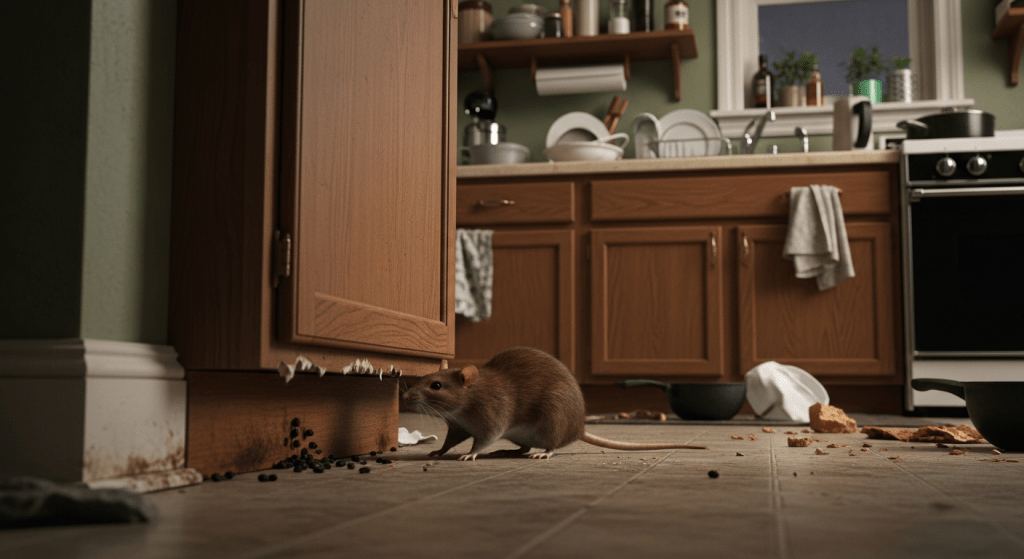
- Dark, thick excrement (1 to 2 cm) found near walls or behind appliances
- Greasy marks on baseboards and low wall corners
- Gnawed materials (wood, plastic, electrical cables) in cabinets or under sinks
- Loud nocturnal noises (scratching, shifting) accompanied by debris or moving objects
- Persistent odors of urine or musk in confined spaces in basements or crawl spaces
- Paw prints or tails on dust, visible in seldom-cleaned areas
- Nests with pieces of fabric and insulation discovered in a crack or behind a technical trapdoor
- Circular holes (3 to 5 cm) in low walls, often behind the kitchen
For detailed answers on case management, consult the FAQ extermination. If you are also experiencing bed bugs, If you find a rat, report it promptly to building management, then focus on the rat's origin and the isolation of food sources.
Areas hidden specific to the neighborhood
| Location | Observable index | Risk of... | Field advice |
|---|---|---|---|
| Cavity floors (old plex) | Debris, excrement, noise accompanied by sawdust | Rapid propagation | Inspect under floors for suspicious noises |
| Back of kitchen cabinets | Nibbles of food, traces of passage | Food contamination | Move equipment, check behind |
| Bath/toilet hatches | Displaced insulation, damaged cables | Structural damage | Open and check with lamp |
| Semi-buried basement | Strong odor, dusty fingerprints | Nest installation | Check all foundation access points |
| False ceilings / crawl space | Displaced insulating materials, regular noise | Moving between homes | Inspect for mouse noise at night |
| Unsealed window sills | Greasy marks on the rim | Discreet entry | Seal any visible cracks |
Errors frequent of occupants
- Confusing a noise in the walls with the simple presence of a ceiling mouse without checking the physical traces.
- Ignore small holes behind furniture, thinking it's an invisible mouse infestation, when in fact it's a rat infestation.
- Leaving food accessible in the kitchen attracts both rats and other pests such as ants. At the slightest trace, resealing containers and cleaning surfaces is crucial.
- Be sure to report any structural damage (e.g. corroded material, damaged electrical wiring) to the management company or manager.
- Use unsuitable products, which may disperse rodents to other parts of the building
- Neglect regular inspections of technical areas (crawl space, back of bathroom)
- Think that the absence of noise at night indicates the absence of rats: some change their rhythm depending on the disturbance.
- Do not insulate access points around pipes or central heating systems
Risks washrooms and collective
The presence of rats in Saint-Laurent buildings poses concrete health risks: the spread of disease through urine or excrement, contamination of foodstuffs and rapid deterioration of structures (wiring, insulation). Occupants are also vulnerable to cross-complaints between apartments, especially in older buildings. For effective management and advice tailored to your situation, consult the FAQ or contact the team directly via this form.
Approach professional compliant Quebec
When faced with a rat infestation, or when in doubt about the nature of the rodent, professional intervention is essential to locate active outbreaks and implement solutions that comply with Quebec standards. An on-site diagnosis by a specialist can help identify structural access points and limit propagation. For any questions or urgent inspections, contact us quickly. Furthermore, the presence of termites in some buildings points to similar structural weaknesses: a full inspection is then recommended, then refocus your vigilance on rat signs for immediate action.


 Français
  English (Canada)