
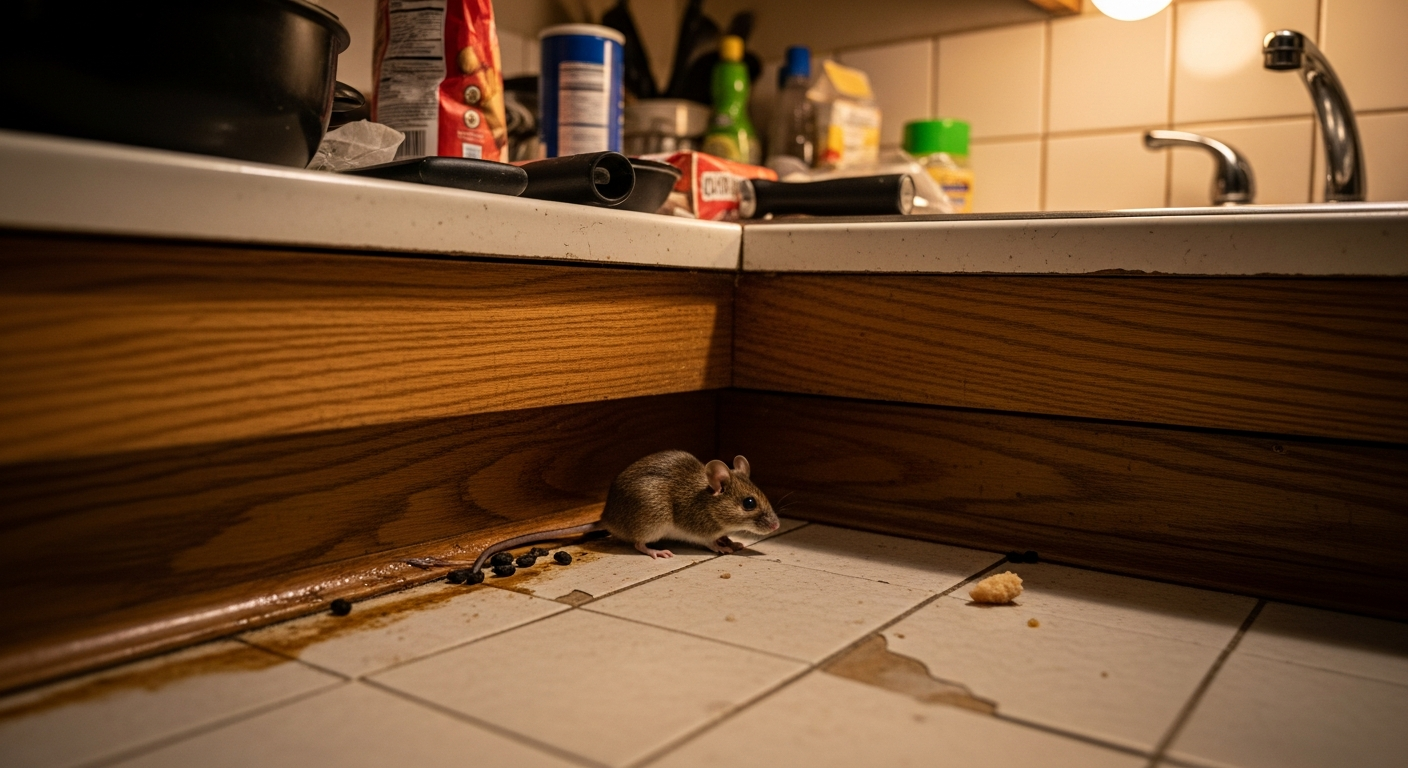
Nocturnal mice in the kitchen: food diagnostics in Hochelaga-Maisonneuve mouse
In the Hochelaga-Maisonneuve district, the forced cohabitation with mouse in the kitchen affects plexes as well as older buildings and multi-unit dwellings. Many occupants discover traces of passage in the early hours of the morning, or hear noises in the walls, without understanding why these rodents wait until nightfall to come out. This nocturnal presence is linked to access to foodstuffs, the configuration of buildings in the area and mobility between dwellings. For a proper diagnosis, the advice of a exterminator is essential.
Diagnosis in-depth
In Hochelaga-Maisonneuve, complaints from’mouse infestation Mice are mainly found in the kitchens of older buildings and plexes, where there are many entrances between dwellings and food stores are sometimes exposed. Mice are mainly nocturnal: they wait for silence to emerge, explore cupboards, move around in walls, ceilings or crawl spaces. This behavior limits their exposure to humans and maximizes their chances of finding food.
The presence of cockroaches in the same wetlands or food zones may reveal a common structural problem, but professional inspection then refocuses analysis on typical mouse damage: grease marks, droppings and gnawed materials are the real indicators to watch out for at home.
Signs indirect
- Small black or brown droppings in cupboards, under sinks or along baseboards.
- Food packaging nibbled or opened without visible explanation.
- Enlarged holes or cracks around pipes or in kitchen walls.
- Dark greasy streaks along walls, baseboards or inside cupboards.
- Noises in the walls at night, always accompanied by displaced materials or visible residues on the floor.
- Persistent musky odor, sign of a nearby colony.
- Insulation materials or papier-mâché found outside their original location.
- Nests made of shredded fibers, paper or textiles in inaccessible areas.
For detailed answers, see our FAQ extermination. The discovery of these signs in the kitchen should also alert you to the risk of crossing paths with other rodents such as rats, However, the most urgent need is to target the specific activity of the mice and secure the foodstuffs.
Areas hidden specific to the neighborhood
| Zone | Typical access | Index to watch | Caution |
|---|---|---|---|
| Kitchen base units | Openings behind baseboards | Excrement, gnawed packaging | Risk of rapid infiltration |
| Under-sink / Piping | Cracks around the plumbing | Grease marks, displaced materials | May promote invisible mouse infestation |
| Suspended ceiling | Access through party walls | Noise at night, insulation debris | Possible spread to neighbors |
| Pantry / cellar | Poorly sealed gaps | Nibbled food, musky smell | Promotes night-time circulation |
| Technical void / wall corner | Small structural holes | Fiber nest, papier-mâché | Mandatory inspection for suspicious noises |
| Antique baseboards | Floor space | Displacement of dust, dark traces | Can encourage multiple passages |
Errors frequent of occupants
- Leave food uncovered or accessible on counters at night.
- Postpone filling cracks or small holes in the kitchen.
- Use only traps without complete inspection of passages.
- Ignore noises in the walls without looking for concrete traces.
- Clean superficially without checking hidden areas (baseboards, under-cabinets).
- Confusing a ant infestation with mouse activity when only crumbs are observed; always look for specific signs of rodents and act quickly to avoid proliferation.
- Neglecting to inform the manager or neighbors of repeated signs.
- Store foodstuffs in easy-to-pierce plastic bags.
- Underestimate the ability of mice to climb or pass through very small spaces.
Risks washrooms and collective
An infestation of mice in the kitchen poses major health risks: contamination of food, spread of bacteria and triggering of allergies. In the multi-unit buildings of Hochelaga-Maisonneuve, the mobility of mice between apartments accentuates the speed of dissemination. See our FAQ or contact us to take action as soon as the first signs appear: contact form.
Approach professional compliant Quebec
When faced with persistent nocturnal activity and signs of infestation, a structured response that complies with Quebec standards is essential. Our team carries out a detailed inspection of access points, accurately identifies nesting sites and implements lasting corrective measures. Make an appointment via our contact.
In some older buildings, the presence of termites may point to structural problems that also encourage the passage of mice. However, the priority must always be to close off access routes and secure food supplies against rodents.


 Français
  English (Canada)